
Protective packing
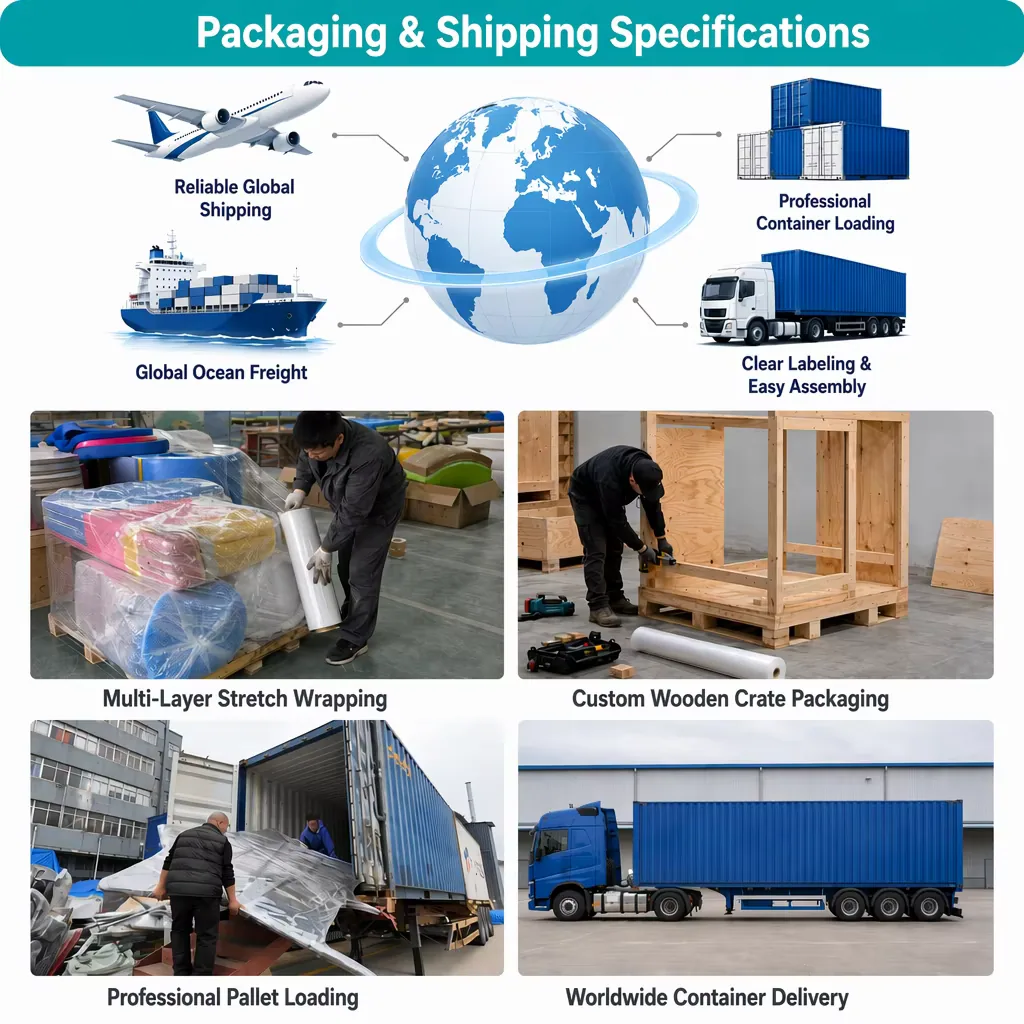
Use appropriate wrapping, edge protection, bundles, and crates around component needs.
A custom playground arrives as many coordinated components. Protective packing, readable labels, loading logic, delivery access, and installation information all influence what happens after the container or truck reaches the site.
Every project combines design decisions, operating needs, technical constraints, and delivery responsibilities.
Use appropriate wrapping, edge protection, bundles, and crates around component needs.
Connect packed components to zones, drawings, and installation sequences.
Consider size, weight, container use, unloading order, and site access.
Align delivery terms, schedule, documents, and destination responsibilities.
Destination conditions can affect packing and delivery decisions, so access and installation responsibilities should be clarified early.
Prepare the Brief →Destination and preferred shipping terms
Port, customs, and consignee information
Unloading equipment and delivery access
Door, lift, corridor, and storage dimensions
Phased versus single delivery
Installation team and labeling preferences
The exact deliverables depend on the project, but the decision path remains clear.
Review destination, shipping terms, port, access, unloading, and storage.
Group, protect, and label components around the project and installation logic.
Coordinate the agreed packing, shipping, and project reference information.
Share delivery details and connect the received components to installation guidance.
Final specifications, responsibilities, standards, and timing are confirmed against the actual project scope.
A floor plan with dimensions, clear height, columns, entrances, venue type, target ages, preferred direction, budget range, and target opening date gives the project a productive starting point.
Yes. The layout, activity mix, age zoning, colors, entrance treatment, and selected features can be developed around the site and the approved project brief.
The target market and required documents should be confirmed at the beginning. Final specifications and supporting documents are matched to the approved configuration rather than assumed in advance.