Key takeaways
- A complete play structure and its individual components are different buying units.
- Combine different activities instead of filling the venue with similar attractions.
- A toddler area is a planned zone, not simply a smaller version of every attraction.
- Compare compact soft-play sets by components and configuration, not only by area.
- Request layout-specific documents, cleaning access, spare parts, and a clear installed scope.
What is indoor playground equipment called?
Indoor playground equipment is the broad name for the structures and activities inside a play venue. Soft-contained play structure, indoor play frame, and multi-level play system usually refer to connected platforms, padded elements, netting, and routes. A slide or tunnel may be one component within that system rather than a separate purchase.
Soft play is a less precise everyday term. It can mean a small set of padded shapes, a compact slide-and-ball-pool combination, or an entire indoor play center. Use the equipment name together with a photograph, model reference, and component list when asking for a quotation.
The categories below overlap because a single installation can combine several activities. They are a naming and selection guide, not a claim that all venues need all ten. Concept and catalog images illustrate configurations; they do not verify an installed project's performance or compliance.
Indoor playground equipment names and types at a glance
Start with what children will do. The equipment mix should provide a choice of activities without making movement, observation, cleaning, or maintenance unnecessarily difficult.
| Equipment type | Names you may hear | Recognizable feature | Main play activity |
|---|---|---|---|
| Multi-level play structure | Indoor play frame; soft-contained play system | Connected platforms, netting, and several activity routes | Explore a sequence of climbing, crawling, and sliding |
| Slides | Tube, spiral, wave, multi-lane, or toddler slide | A defined sliding route from an entrance to an exit | Reach the start, descend, and repeat the play loop |
| Ball pit | Ball pool; ball-play area | An enclosed space containing loose play balls | Move through, collect, and play with the balls |
| Soft-play set | Foam play shapes; padded climber; soft-play combination | Covered blocks, steps, ramps, arches, or rockers | Climb, crawl, balance, arrange, and imagine |
| Tunnels and padded obstacles | Crawl tube; roller; squeeze-through; stepping route | A route with openings or obstacles to negotiate | Crawl, step, turn, and work out the next move |
| Climbing nets and walls | Rope climber; climbing tower; traverse wall | A pattern of ropes, holds, or steps | Choose a route using hands and feet |
| Ninja obstacle course | Ninja lane; challenge course | A sequence of balance and hanging challenges | Attempt individual obstacles or a connected course |
| Trampoline zone | Jump court; trampoline court | Supported jumping surfaces and defined court boundaries | Jump within the designated activity and rules |
| Role-play station | Pretend shop; playhouse; mini town; play kitchen | A small familiar setting with interactive features | Invent roles, stories, and shared games |
| Panels and interactive games | Activity wall; sensory panel; projection game | Tactile controls or a responsive play surface | Turn, match, touch, aim, or move to a game prompt |
1. Multi-level soft-contained play structures
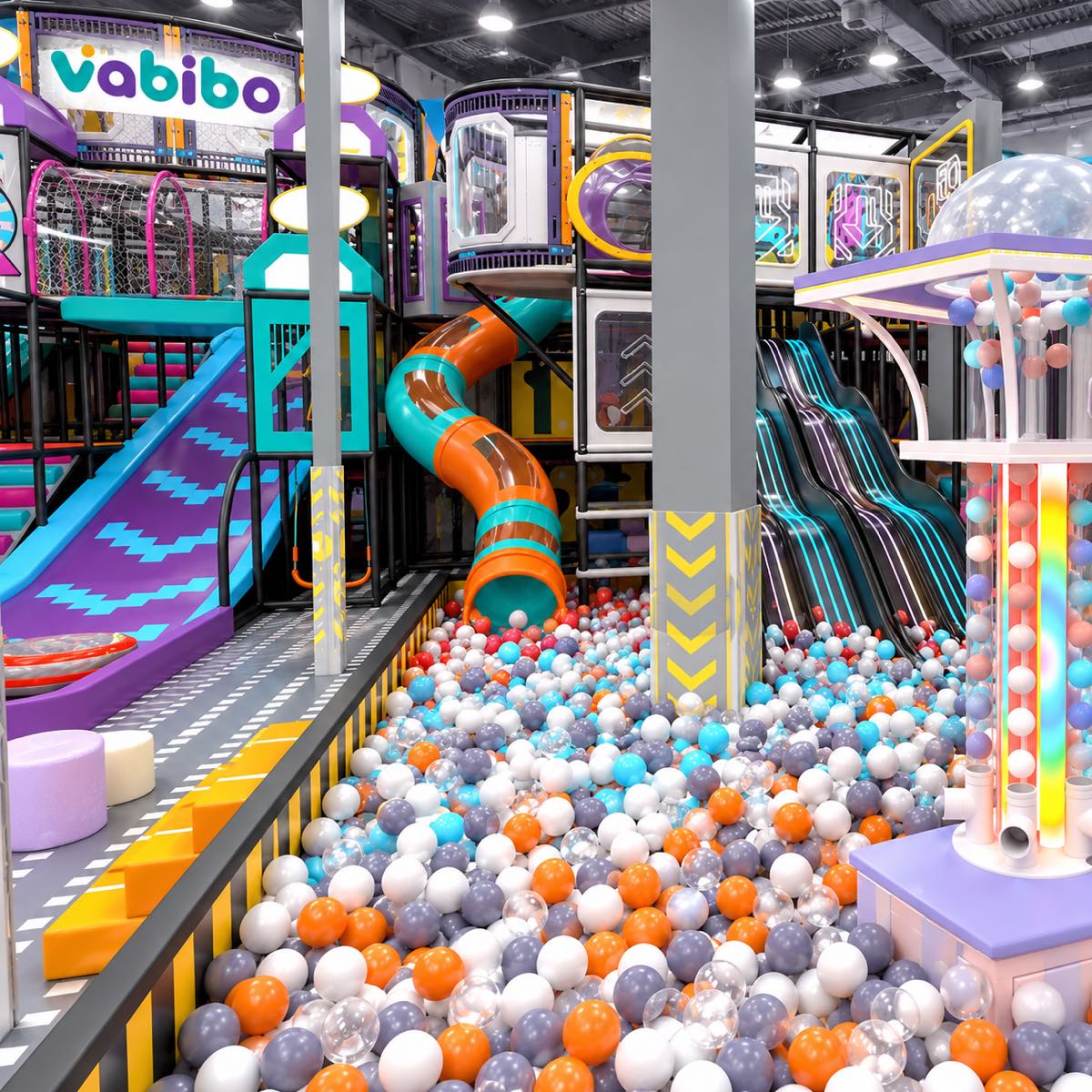
A multi-level play structure gives children a network to explore. Platforms connect crawl routes, climbing elements, bridges, and slides, so reaching an activity is part of the play. Different paths can make a single system feel more varied than a simple up-and-down route.
It can be the central attraction in an indoor play center or one zone within a larger FEC. Compare the actual activity sequence, entrances, visibility, and adult access—not just the number of levels. More height also changes the building constraints and inspection access. Request a dimensioned layout that shows how the frame relates to columns, overhead services, circulation, and the intended users.
2. Indoor slides: tube, wave, spiral, and multi-lane
Slides create an easily understood play loop: find the entrance, reach the starting point, descend, and return. A tube encloses the route; a spiral changes direction; a wave changes its profile; a multi-lane arrangement provides separate adjacent sliding paths. The access route can be as important to the experience as the chute itself.
A visually dramatic slide is not automatically appropriate for a younger-child zone or a low-ceiling venue. Compare the selected model's intended users, entrance arrangement, descent, exit, and required surrounding space as one system. Ask how staff can observe and access it and how it will be cleaned. Commercial slide families are also illustrated in Soft Play's manufacturer catalog, linked below as a terminology reference.
3. Ball pits and ball pools
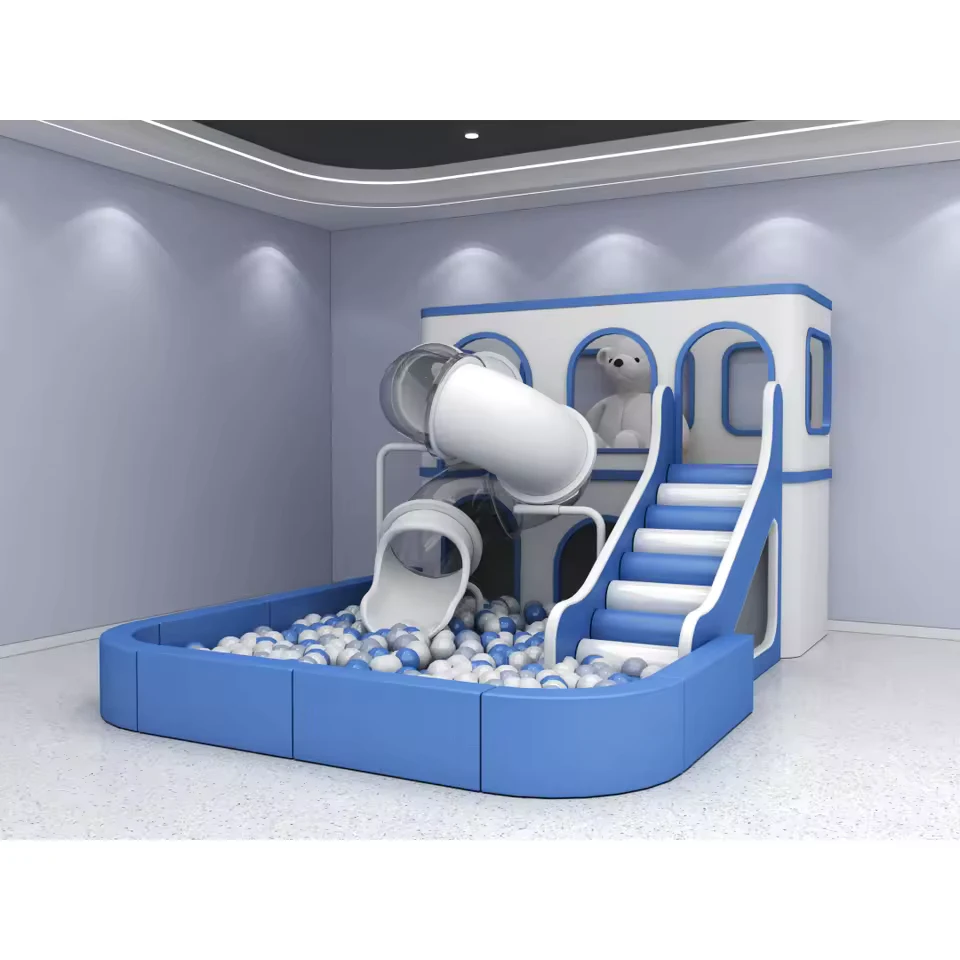
Ball pit and ball pool usually describe the same equipment type: a bounded area filled with lightweight play balls. Children may move through the balls, gather them, or use associated ball-play features. A ball pool can be a focused activity or part of a slide-and-climb combination.
For buyers, the visible pool is only part of the decision. Clarify the balls, base, padded perimeter, entry points, cleaning method, and access beneath or behind the equipment. If a slide enters the pool, its exit needs to be reviewed as part of that specific design. Do not assume that adding balls makes any landing arrangement suitable.
4. Soft-play sets, padded climbers, and foam shapes
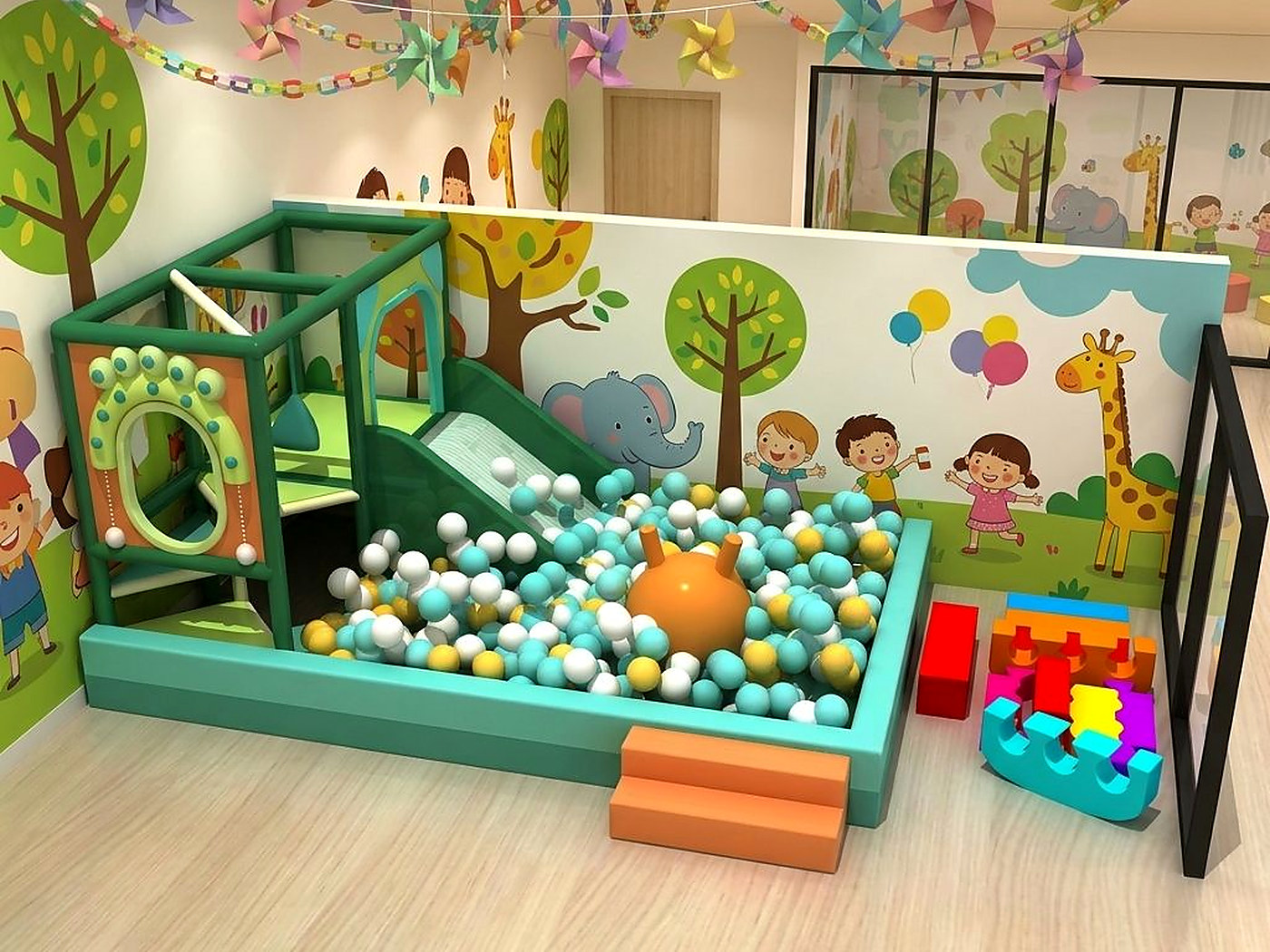
Soft-play sets may include covered foam blocks, ramps, steps, arches, wedges, rockers, and low-level climbers. Children can explore a short route or use suitable movable pieces in different arrangements. These sets can support a compact play corner without requiring a large multi-level structure.
They are especially worth comparing for younger-child venues, play cafés, and supporting zones, subject to the selected products' intended use. Ask for the included pieces and their dimensions, covering and padding specifications, seams, fastening method, cleaning instructions, and replacement options. Smaller soft-play products are normally compared by set or component configuration—not automatically by square meter. Allow for storage and resetting when pieces are movable.
5. Crawl tunnels and padded obstacle routes
Crawl tunnels, padded rollers, hanging obstacles, and stepping elements turn a connection into an activity. A child may duck through an opening, choose how to pass an obstacle, or follow a sequence to another part of the structure. These elements often sit inside a larger play frame rather than being standalone attractions.
A good comparison looks at the route rather than counting obstacles. Ask where congestion can form, how someone can turn back, and how an adult can reach the area when required. Visibility, ventilation where relevant, cleaning access, and replaceable wear surfaces should be discussed for the actual design. Avoid placing an awkward bottleneck on the only route between major activities.
6. Climbing nets, towers, and walls
Climbing equipment provides a route for hands and feet. Nets offer a pattern of openings; walls use holds; towers or multi-sided structures may provide several directions. The challenge comes from the route, spacing, movement, and decisions involved—not height alone.
A low traverse feature, a net inside a contained structure, and a tall climbing attraction are different systems. Compare intended participants, access, landing or protection arrangements, structural interfaces, supervision, and maintenance responsibilities. Where harnesses or belay systems are involved, confirm the specialized operating and inspection requirements. A supplier should identify the actual equipment system and its documentation rather than relying on the generic phrase climbing wall.
7. Ninja and challenge courses
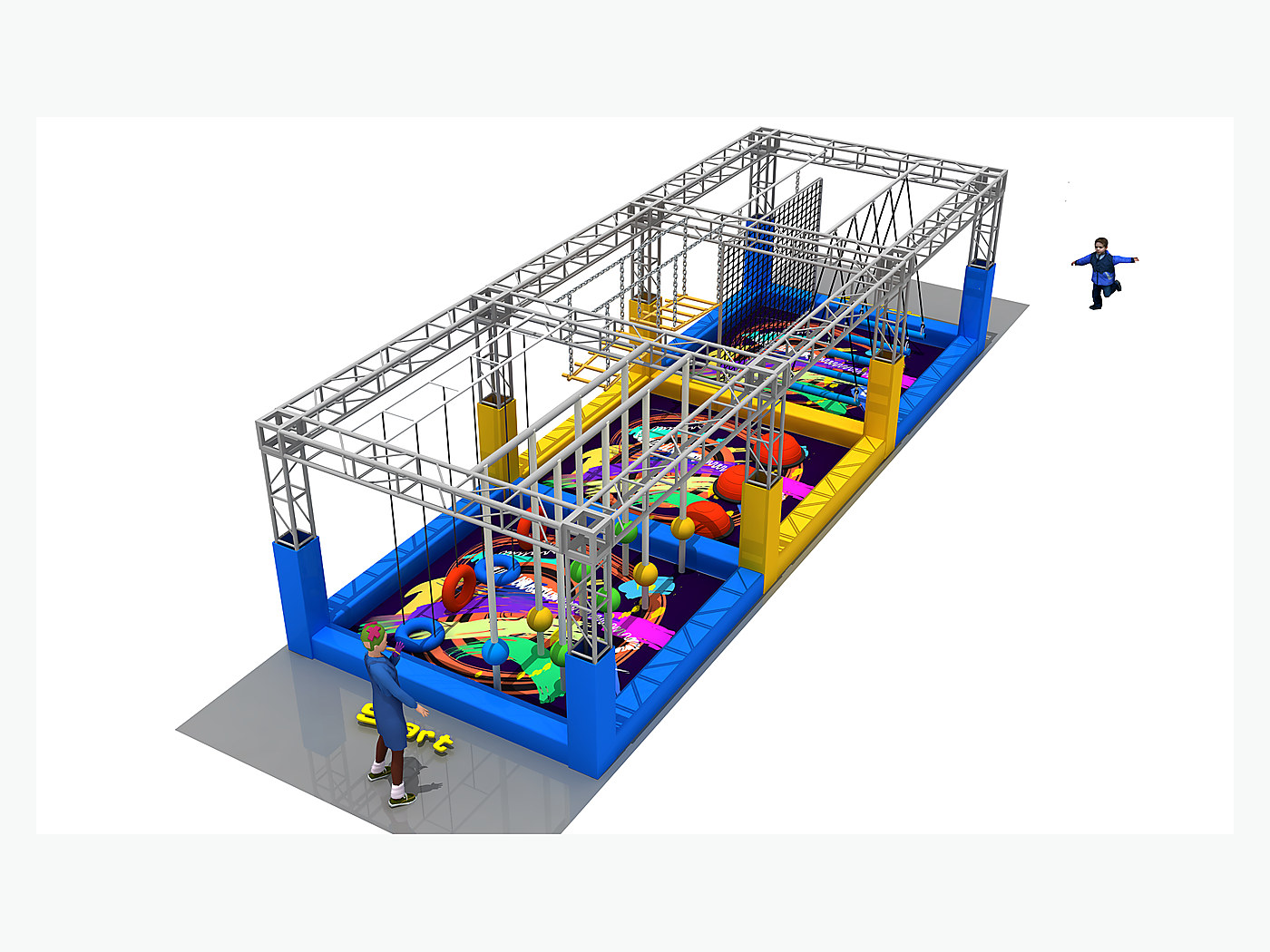
A ninja course strings together balance, stepping, gripping, and hanging challenges. Some users attempt one obstacle repeatedly; others follow a complete sequence. Parallel lanes or varied difficulty can change the experience, but these features need to be matched to the intended participants.
This type may suit an active-play area with the space and operating capability to manage it. Ask for obstacle dimensions, progression, bypass options where appropriate, fall-protection arrangements, user rules, and staff positions. Separate the activity from toddler play and general circulation. Check how high-wear grips, ropes, padding, and other parts are inspected and replaced before approving the visual theme.
8. Trampoline and jump zones
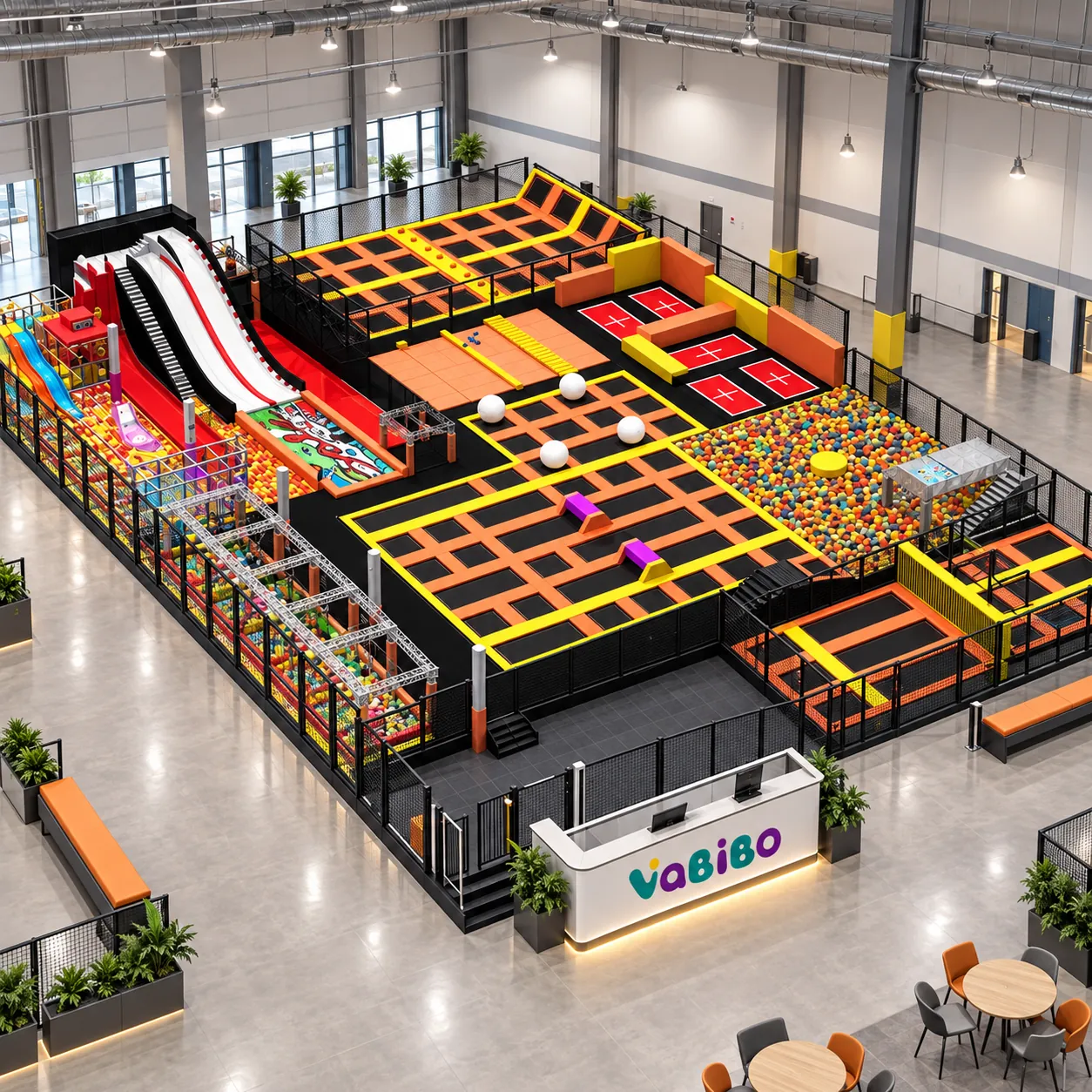
A trampoline zone offers a different movement experience from climbing or sliding. Open jump areas and activity-specific courts have different layouts and operating purposes. A court within a family entertainment center should be evaluated as its own equipment system, not as an interchangeable padded playground module.
The quotation needs to connect the structure, jumping surfaces, padding, boundaries, overhead space, supervision, and maintenance plan. Ask for equipment-specific participation rules and the documents relevant to the destination. A foam pit or airbag is a separate designed landing system; neither should be assumed to be included or suitable simply because it appears beside a trampoline in an image.
9. Playhouses, pretend shops, and role-play towns
A pretend shop, kitchen, clinic, workshop, or playhouse gives children a familiar setting to reinterpret. A counter becomes a café, a window becomes a ticket booth, and a small group can invent its own roles. The activity depends on usable features and interaction, not just a printed façade.
Role-play stations can provide a change of pace alongside more physical attractions. Compare approach space, sightlines, door and opening details, finishes, and the suitability of any loose accessories for the intended users. Ask where accessories are stored and how the area is reset. A few well-chosen interactive stations may fit a play café better than a crowded row of decorative houses.
10. Activity panels and interactive play games
Activity panels offer things to turn, trace, match, slide, or touch. They can be mounted on a wall or integrated into a structure. An interactive game may instead use sensors, lights, or projection to respond to movement or targets. These are related ways of adding variety, but their technical and maintenance needs differ.
Choose a clear play action before choosing a screen. For a panel, review reach, moving parts, mounting, and replacement components. For a digital game, request a working demonstration and confirm space, lighting, power, licensing, updates, fault support, and recurring fees. Keep active game zones out of circulation routes. The external manufacturer examples below illustrate panel and movement-based game formats, not Vabibo partnerships or bundled inclusions.
Which equipment mix fits your venue?
Start with the audience and visit pattern, then choose complementary activities. One operator example, Up & Away Indoor Play, lists a play structure, infant and toddler zone, and hands-on exhibits as distinct parts of its offer. It illustrates a mixed activity approach, not a formula every venue should copy.
The combinations below are planning suggestions. They are not standard packages or evidence of profitability. Reserve the non-play space first so a promising equipment list does not crowd out circulation, entry control, parent seating, storage, or staff access.
| Venue | Activities to compare | Key planning question |
|---|---|---|
| Small play café | Compact slide-and-ball-pool combination, soft play, pretend shop, panels | Can parents see the play area without café traffic crossing it? |
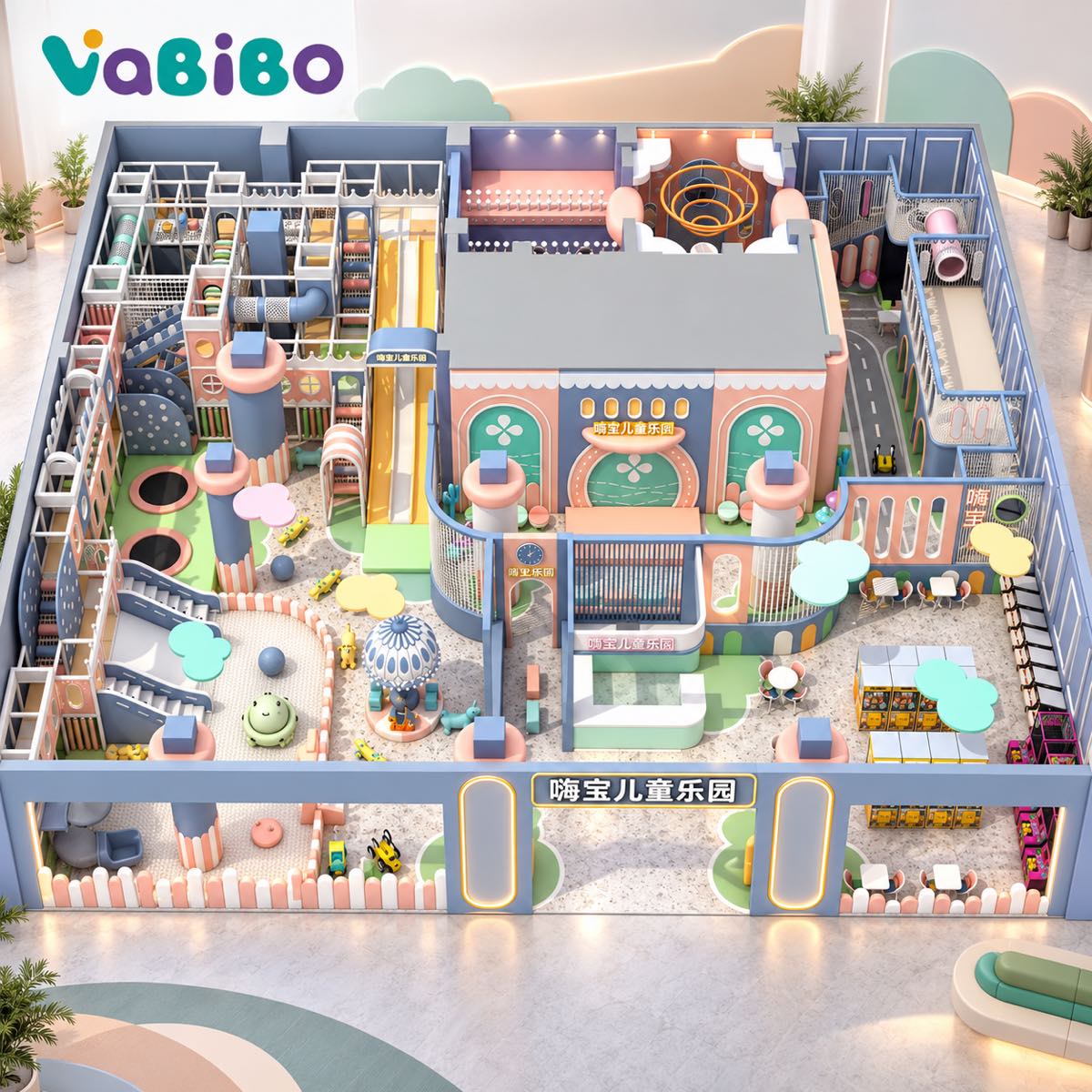
| Dedicated children's play center | Connected play frame, varied slides, tunnels, climbing, separate younger-child zone | Does the route offer variety without bottlenecks or hidden corners? |
| Mall family attraction | Visible signature play feature, compact activity mix, clearly controlled entrance | How do queuing, sightlines, delivery access, and building limits affect the proposal? |
| Mixed-age FEC | Children's play plus separate trampoline, climbing, or challenge attractions | Can the operator manage boundaries, rules, staffing, and maintenance for each system? |
| School or early-learning venue | Suitable low-level soft play, role play, panels, and simple movement routes | Does each configuration match the intended users and staff's operating approach? |
What should you check before buying indoor playground equipment?
Compare suppliers against the same layout and component schedule. Equipment names and catalog images cannot establish the intended users, dimensions, capacity, document scope, installation responsibility, or ongoing support for a specific order.
Ask which standards and assessments apply to each equipment system and destination. ASTM F1918, for example, addresses soft-contained play equipment; its existence is not evidence that a particular proposal complies or that every attraction in an FEC shares the same requirements. Obtain a configuration-specific document review from the appropriate parties before approval.
- Reference: ASTM F1918 soft-contained play equipment standard
- Use the indoor playground supplier audit checklist →
- Compare equipment price with landed installed cost →
- Configuration: drawings, dimensions, included components, intended users, boundaries, access, and exclusions.
- Materials and upkeep: specified coverings, padding, netting, structural components, cleaning instructions, and replacement-part availability.
- Evidence: relevant document scope, identified production or trial-assembly records, inspections, and packing references for the agreed order.
- Delivery: production milestones, freight basis, import responsibilities, installation model, site readiness, and handover records.
- Total cost: equipment plus transport, local works, installation, required reviews, opening preparation, and any recurring digital fees.
Build your indoor playground equipment shortlist with Vabibo
The most useful shortlist is not the longest one. Choose the activities that fit the children you want to serve and the venue you can operate. For an existing playground, observe repeat use, queues, and activities visitors ask for before deciding what to add.
Vabibo can discuss the equipment direction and project scope around your brief. Send a dimensioned floor plan, clear height, site photos, destination, target users, preferred activities, budget ranges, and opening target. Include reference images and identify what you like in each one. That gives the design discussion a clearer starting point than requesting a copy of a whole playground image.
Sources and related references
- Soft Play: commercial slide types
- Soft Play: activity-panel examples
- Valo Motion: physical-digital play product examples
- Up & Away Indoor Play: operator attraction list
- ASTM F1918-21: Standard Safety Performance Specification for Soft Contained Play Equipment
- Vabibo: equipment categories, configurations, and concept references
This buyer guidance supports early planning. Final dimensions, standards, responsibilities, and approvals must be confirmed for the actual project and destination.