
Key takeaways
- Do not let a rendering, quotation, and equipment list describe three different project revisions.
- Release production against a named package of approved files, not an informal chat approval.
- Define the trial-assembly and inspection scope before manufacturing begins.
- Make packing, installation, handover, and after-sales part of the process before the deposit.
- Require order-specific evidence; generic factory media cannot prove the status of the actual project.
Process evidence a buyer can request
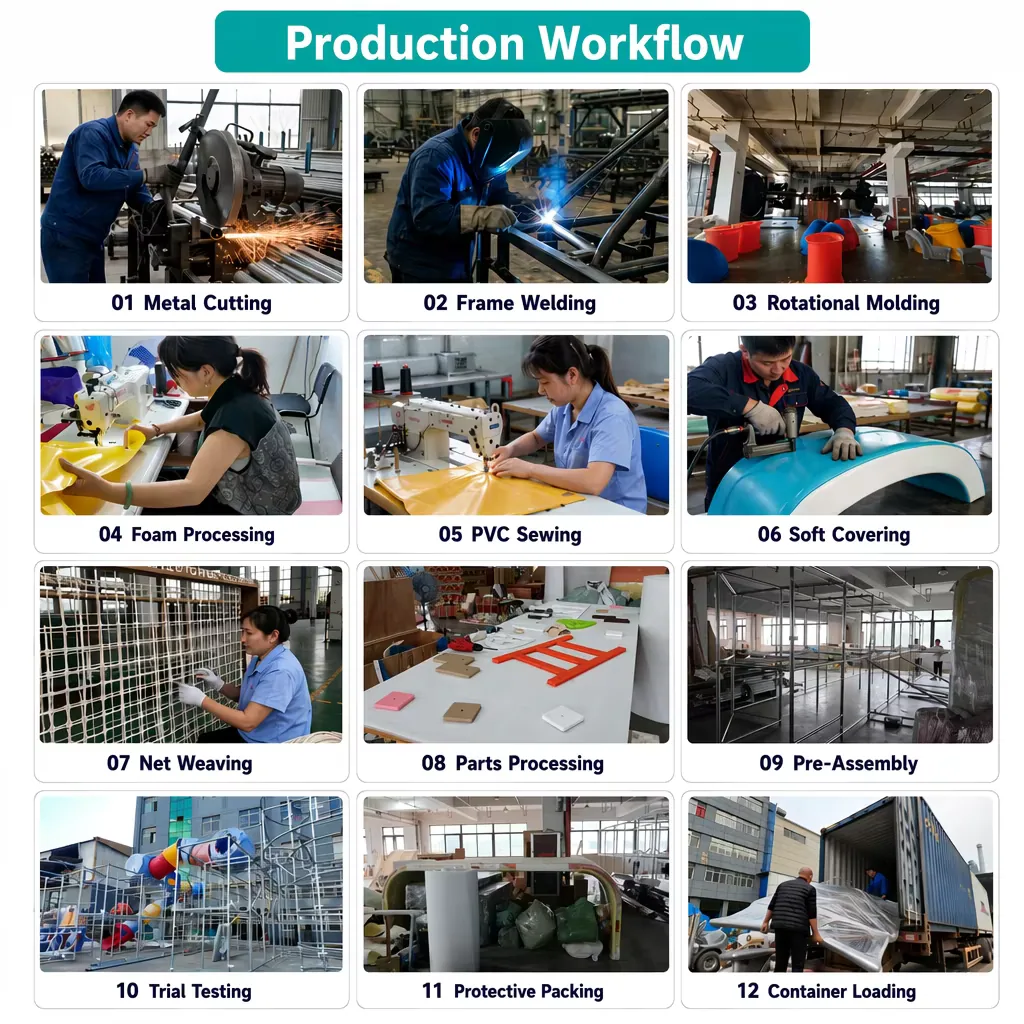
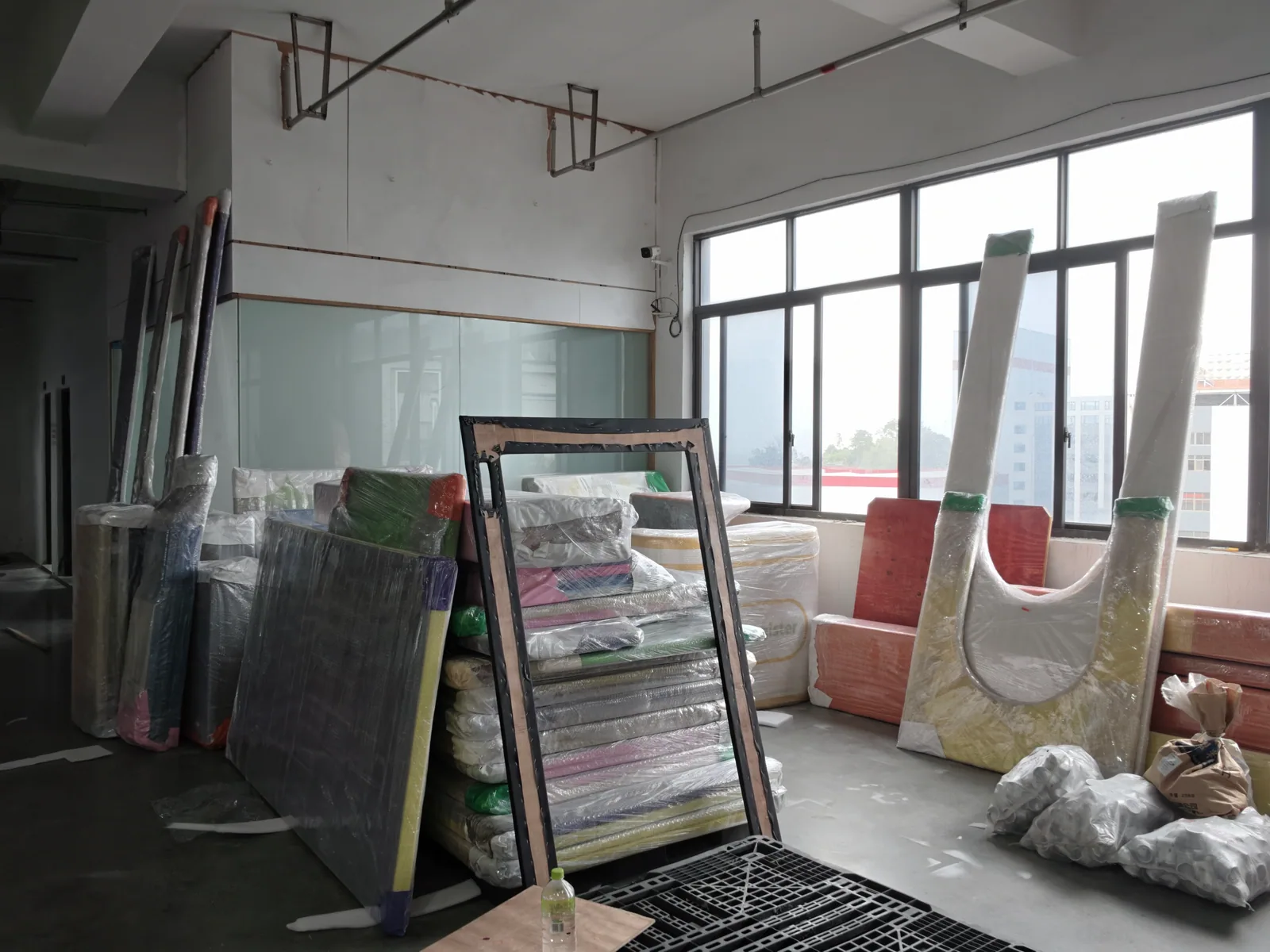
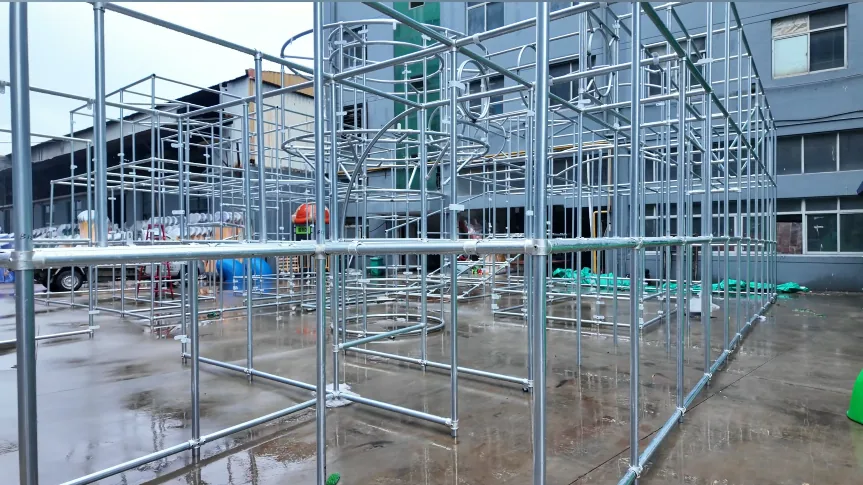
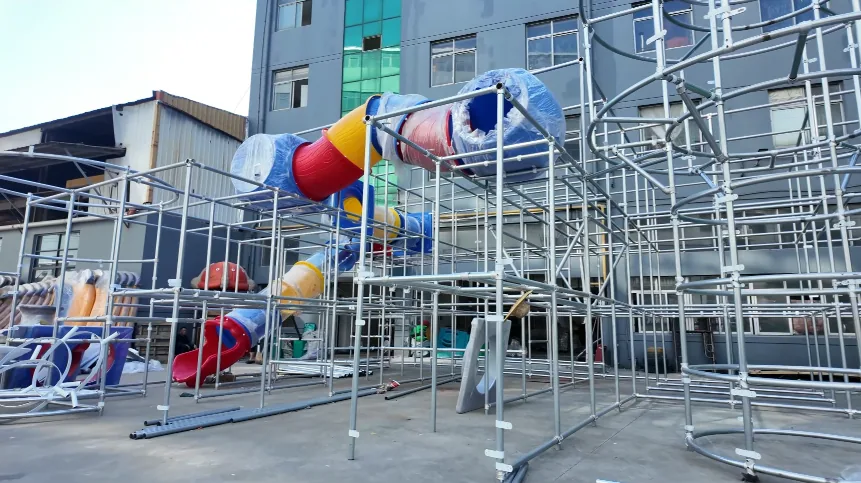
These Vabibo process images illustrate the type of project visibility that can support a custom order. They are not inspection certificates or proof that every future order has passed. The buyer should require dated records tied to the approved project, revision, item, finding, and disposition.
Use stage gates instead of one long sales conversation
A custom playground passes through commercial, design, technical, production, logistics, and site decisions. If those decisions remain scattered across messages, the factory can manufacture one assumption while the buyer expects another. A stage gate creates a clear question: what information entered this stage, what did the supplier return, what was approved, and what remains open?
The exact sequence can change with the project. A repeat distributor order may move quickly, while a multi-attraction FEC may require more local review and coordination. The control principle remains the same: later work should reference the latest approved information, and every change should show its effect on equipment, price, documents, schedule, packing, installation, and responsibility.
| Stage | Buyer input | Manufacturer return | Approval evidence |
|---|---|---|---|
| 1. Brief | Venue, audience, operation, budget, destination, schedule | Questions, missing-information list, proposed next step | Dated brief and assumptions |
| 2. Site review | Plan, height, columns, exits, services, access, photos | Marked plan, constraints, measurement questions | Reviewed site-information register |
| 3. Concept | Priorities, age groups, activities, capacity, visual direction | Zoning, circulation, initial activity mix, budget options | Selected concept direction |
| 4. Design and scope | Comments and local-review input | 3D views, equipment schedule, inclusions, options, exclusions | Controlled design and scope revision |
| 5. Technical approval | Required documents and responsible-party decisions | Key drawings, materials, colors, document and inspection plan | Production-approval package |
| 6. Production | Approved package and change authority | Progress and checkpoint records, change notices | Inspection and change log |
| 7. Trial assembly | Agreed check criteria and witness requirements | Fit, dimension, appearance and correction evidence | Accepted findings and closed actions |
| 8. Delivery and handover | Shipping, site-readiness and installer information | Packing list, labels, loading, installation and handover files | Shipment release and final register |
Stage 1: turn the inquiry into a usable project brief
The first manufacturer task is not to promise a design. It is to identify what decision the buyer is making and what information is missing. Record the venue type, audience, business model, expected capacity, priority experiences, design ambition, destination, budget context, installation plan, target opening date, and decision-makers.
Also clarify the legal and delivery chain early. The buyer should know the proposed contracting entity, payment recipient, manufacturing role, exporter, and main project contact. If specialist attractions or sourced components may be included, the supplier should explain how their design, evidence, inspection, packing, warranty, and replacement responsibilities will be coordinated.
- Name the buyer decision: feasibility, concept selection, budget approval, supplier selection, or final order
- List known information separately from assumptions and unanswered questions
- Confirm who can approve design, commercial, technical, and local compliance decisions
- Set the expected supplier return instead of asking only for a price
Stage 2: check the building before designing the attraction
A floor plan is useful only when its dimensions, revision, and site conditions are understood. The manufacturer should mark the usable boundary, clear height, columns, beams, ducts, sprinklers, lights, entrances, exits, service points, delivery access, and areas reserved for reception, seating, parties, storage, food service, toilets, or circulation.
The supplier is not the local authority, architect, fire engineer, structural engineer, or accessibility consultant. Record which conditions require local professional confirmation and when those decisions must be returned. Designing around an unverified height or missing exit is not customization; it is deferred rework.
Buyer checkpoint: approve the usable design boundary and the list of local confirmations before treating a concept as buildable.
Stage 3: choose zoning and activity logic before visual detail
The initial concept should explain how guests enter, store belongings, reach age-appropriate activities, circulate, queue, rest, and leave. It should connect activity level with sightlines, staff access, capacity assumptions, cleaning, maintenance access, and the relationship between toddler, junior, challenge, party, seating, and supporting revenue zones.
Ask for a core concept and clearly priced options rather than one oversized wish list. This lets the buyer protect the main visitor journey when budget, building constraints, or local feedback changes. A useful concept return also identifies the choices still required before detailed 3D work begins.
Stage 4: connect the 3D design to a controlled equipment scope
A rendering communicates experience and appearance, but it is not a complete production instruction. Each design revision should connect to a plan, equipment schedule, model or custom-item description, key dimensions, selected options, material and finish direction, document assumption, and commercial total.
When the buyer changes a slide, adds an attraction, adjusts a boundary, or changes the theme, the supplier should record which drawings, items, documents, price lines, lead times, packages, and installation tasks are affected. Keep comments and responses in one register so old decisions do not reappear after approval.
- One revision code and date across the plan, 3D views, equipment list, and quotation
- Clear distinction between included items, alternatives, allowances, and visual references
- Named buyer comments, supplier responses, changes, and approval status
- Updated assumptions and responsibilities whenever the scope changes
Stage 5: define materials, documents, and production-release files
Before production, translate the selected concept into a package the production and quality teams can follow. The level of technical detail depends on the equipment, but the package should identify the controlling layout, equipment schedule, key construction and interface details, color and finish references, material descriptions, quantities, labels, document list, and inspection checkpoints.
Standards and certificates should not be handled as a generic logo collection. Record the destination-market path, the document holder, product or material covered, relevant scope, limitations, and any local professional or inspector review still required. The buyer should know which documents are deliverables and which claims still need confirmation for the final configuration.
Production release should state the exact approved file revisions. Open technical or commercial items should be visible, assigned, and either closed or formally accepted as an assumption.
Stage 6: keep production evidence and changes tied to the order
Progress photos can support communication, but useful evidence identifies the project, date, work stage, item or zone, drawing reference, check performed, result, and responsible person. Agree the important checkpoints before production starts so the buyer is not given a random folder of images at the end.
Custom projects change. When a material, dimension, finish, component, supplier, document assumption, or schedule must change after release, require a written change notice. It should explain the reason, affected files and items, commercial and schedule effect, evidence required, and approval authority before the change becomes part of the order.
Stage 7: use trial assembly to test the agreed risks
Trial assembly is most valuable when it targets custom interfaces and foreseeable errors. Depending on the order, that can include structural frame relationships, decks, panels, slides, tunnels, themed parts, barriers, nets, padding, entrances, or a representative module. It can reveal fit, access, missing parts, alignment, finish, labeling, or assembly-sequence issues before international shipment.
Full assembly of an entire large venue may be unnecessary or impractical. The contract should define the agreed scope, check criteria, evidence format, buyer witness or remote-review arrangement, correction process, recheck requirement, and shipment-release authority. Unresolved findings should not disappear when the equipment is packed.
| Record field | Why it matters | Weak substitute |
|---|---|---|
| Project and revision | Connects the evidence to the ordered configuration | Undated factory photograph |
| Item or zone | Shows what was actually assembled or checked | Claim that the whole project was tested |
| Check and acceptance criterion | Explains what pass or fail means | Photo without measurement or finding |
| Result and issue reference | Makes nonconformities visible | Only selected positive images |
| Correction and recheck | Shows that the issue was closed | Verbal promise to fix later |
| Release authority and date | Prevents packing before required closure | Informal chat approval |
Stage 8: preserve traceability through packing, installation, and handover
Packing is part of the manufacturing process because a correctly made component can still fail the project if it is unidentified, missing, damaged, or impossible to locate during installation. Package references should connect to zones, drawings, and quantities. The buyer should receive a packing list and understand protection method, loading sequence, receiving checks, storage conditions, and the shortage or damage reporting process.
Before dispatch, close the installation responsibility matrix. Identify who supplies labor, supervision, drawings, tools, lifting, temporary facilities, travel, accommodation, local fixings, flooring, utilities, checks, cleaning, training, and final acceptance. The final handover register should show the files delivered, spare parts, outstanding items, warranty path, and after-sales contacts.
What to request from a manufacturer before the next approval
At each stage, ask for a compact return package rather than more promotional material. The package should show the current decision, the controlling files, changes since the last revision, open questions, responsibility, evidence, commercial effect, schedule effect, and the exact approval requested from the buyer.
Vabibo can use a dimensioned plan and project brief to return a marked site review, proposed zoning and activity direction, missing-information list, scope structure, responsibility questions, and recommended next approval. That creates a workable starting point for design and quotation without pretending that unresolved local decisions or future evidence already exist.
- Current plan and scope revision
- Changes since the last approval
- Open questions, assumptions, owner decisions, and local confirmations
- Evidence received and evidence still due
- Included, optional, excluded, allowance, and buyer-supplied items
- Price, schedule, document, packing, installation, and risk effects
- Named next decision and approval authority
Sources and related references
- Vabibo — Indoor Playground Equipment Manufacturer
- Vabibo — Indoor Playground Supplier Audit Checklist
- Vabibo — How to Prepare a Floor Plan
- Vabibo — Indoor Playground Project Timeline
This buyer guidance supports early planning. Final dimensions, standards, responsibilities, and approvals must be confirmed for the actual project and destination.