
Structural components
Review the coordinated frame, connections, corrosion protection, and interface details.
Material quality cannot be judged by one headline specification. Buyers should review how structural, padded, surface, panel, graphic, hardware, and activity components work together in the confirmed project.
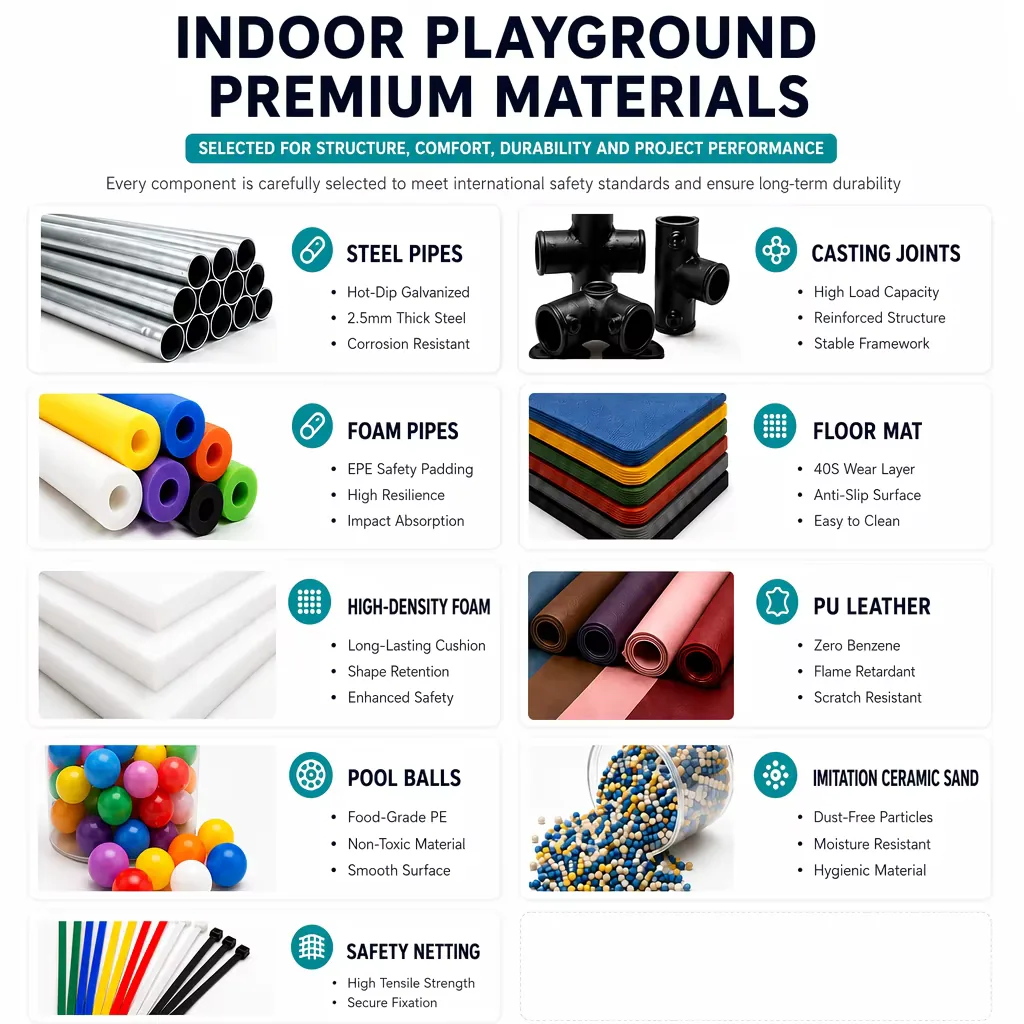
Every project combines design decisions, operating needs, technical constraints, and delivery responsibilities.
Review the coordinated frame, connections, corrosion protection, and interface details.
Match padding, soft-touch surfaces, and flooring to the use zone and maintenance plan.
Consider durability, finish, color consistency, edge treatment, and replacement needs.
Confirm which specifications, test reports, drawings, and records apply to the order.
The right choice depends on who uses the equipment, how often, how it is maintained, where it is installed, and what the target market requires.
Prepare the Brief →Component function and use zone
Expected traffic and impact level
Cleaning method and chemical compatibility
Indoor climate and site conditions
Target standards and supporting evidence
Spare parts and future replacement method
The exact deliverables depend on the project, but the decision path remains clear.
Set users, traffic, cleaning, market, visual, and documentation needs.
Connect each material choice to a component, use zone, and agreed finish.
Use measurements, samples, records, and inspection points where appropriate.
Organize the final specification and supporting project information for handover.
Final specifications, responsibilities, standards, and timing are confirmed against the actual project scope.
A floor plan with dimensions, clear height, columns, entrances, venue type, target ages, preferred direction, budget range, and target opening date gives the project a productive starting point.
Yes. The layout, activity mix, age zoning, colors, entrance treatment, and selected features can be developed around the site and the approved project brief.
The target market and required documents should be confirmed at the beginning. Final specifications and supporting documents are matched to the approved configuration rather than assumed in advance.